Reclaiming the Past to Create Lasting Design

A trio of designs celebrating the renewal of materials and the stories embedded within them.
—
The Stories Behind Our Salvaged Tables
Panama Canal Lake – Lhotse Table

This table carries with it the weight of both history and preservation—literally. Crafted from Golden Acacia, also known as Monkey Pod, the slab weighs nearly 2,200 pounds and was pulled from the waters of the Panama Canal Lake.
When the canal was created, it filled in just six months instead of the anticipated six to eight years, submerging entire forests beneath its waters. Redux Wood, a company that began in Vietnam, has been carefully salvaging this preserved timber, offering a second life to wood once thought lost forever.
Furniture designer Martin Goebel first encountered this particular slab of wood in Vietnam six years ago, though it had been cut and waiting for over 15 years. The result is a table as unique as its origin—pristine, storied, and alive with natural history.
World War II Bomber – Everest Table
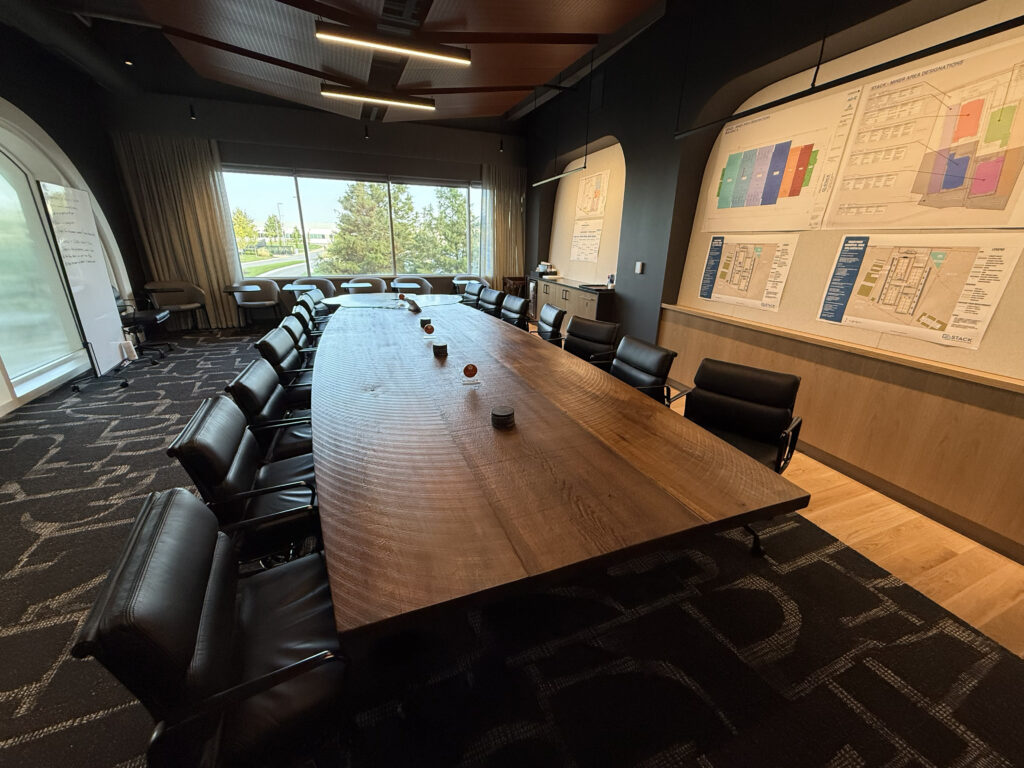
Not every story of reuse begins in the forest. This table is made from Yellow Poplar, an aircraft-grade timber originally prepared for U.S. Army Air Corps bombers during World War II.
Sourced from a gentleman in California who had acquired old bomber parts, the timber still bears the U.S. Army Corps stamp but was never used in manufacturing. With a minimum of 15 growth rings per inch and no knots, the material represents decades of patient growth—roughly 15 years for every inch in diameter.
Though it never took flight, the wood’s destiny as a bomber component was transformed into something equally enduring: a communal surface that brings people together in conversation and collaboration.
Central West End – Everest Table (Round)
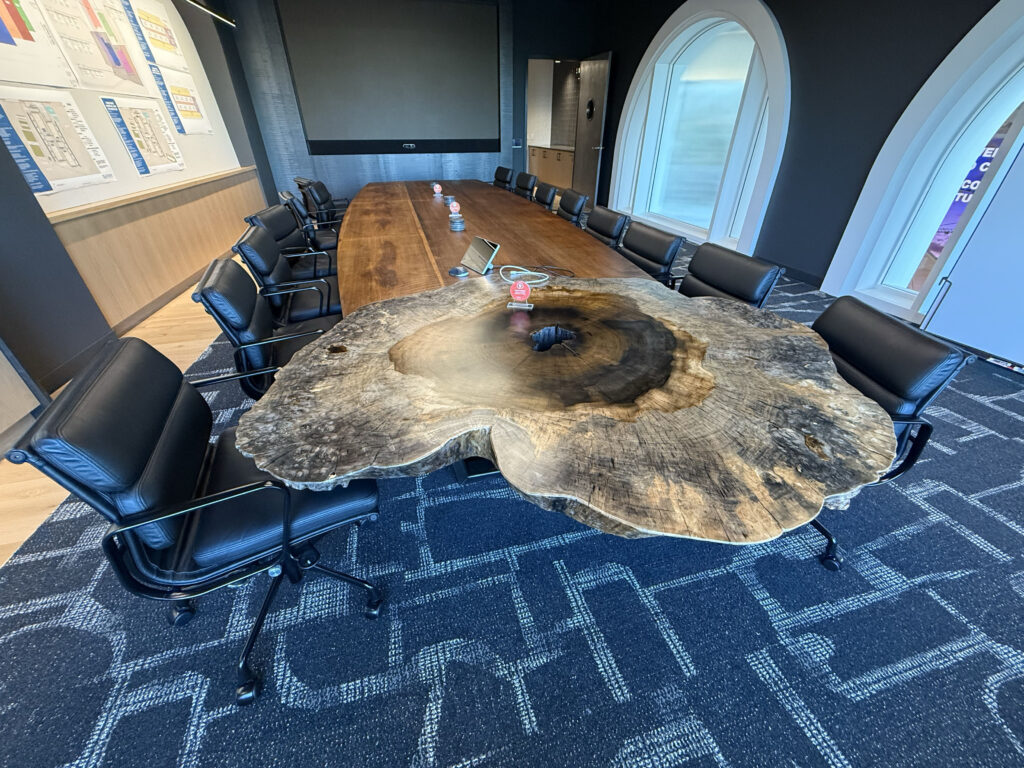
Closer to home, another table traces its roots to St. Louis’s Central West End. The Tulip Poplar used here once stood tall on Washington Terrace Road, where it was planted around 1903 alongside the construction of a historic house.
Over a century later, the tree began to die from the inside out, showing hollow decay at its core. To prevent danger from the massive 20–30 ton structure it supported, the tree was carefully removed. The section used for this table came from the flare at the base—a rare formation that produces a striking “mushroomed” and “compression burl” appearance. What once supported a landmark tree now supports ideas and connection, ensuring its story continues within our space.